Robotic Automation
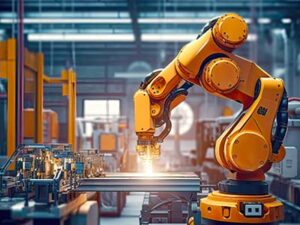
Robotic automation is reshaping industries by integrating advanced robotics and automation technologies to streamline processes and enhance efficiency. By employing industrial robots, collaborative robots (cobots), and autonomous mobile robots (AMRs), businesses can achieve remarkable improvements in productivity, precision, and cost-effectiveness. These technologies are employed across various sectors, including manufacturing, healthcare, logistics, and agriculture, where they handle tasks ranging from assembly and quality control to surgical procedures and precision farming. The adoption of robotic automation not only reduces operational costs and minimizes human error but also opens new possibilities for innovation and growth. As robotics continues to evolve with advancements in artificial intelligence and smart technologies, its impact on industries and everyday life is set to expand, offering unprecedented opportunities for optimization and transformation.
Cobot soultions
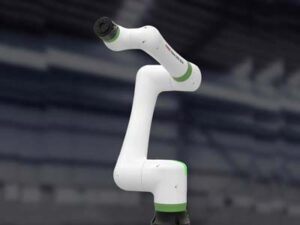
Cobots are advanced robotic systems specifically engineered to collaborate with human workers. They are distinguished by their ability to perform a range of tasks with precision while adapting to human interaction. Cobots are equipped with advanced sensors and safety features that ensure they can operate in close proximity to people without compromising safety.
Hard Automations
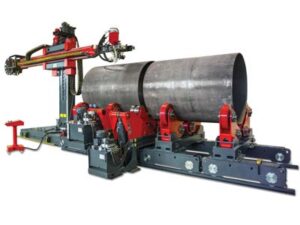
Hard automation involves the use of specialized machinery, equipment, and control systems designed for the mass production of products. These systems are typically custom-built for specific tasks and are characterized by their high efficiency and accuracy in performing repetitive operations. Hard automation systems often include conveyor belts, automated assembly lines, and custom-built machines tailored to meet specific production requirements.
Integration Services
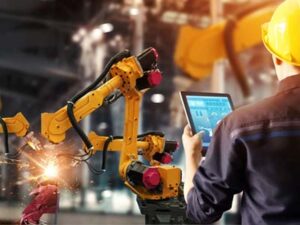
Integration services involve the process of connecting and synchronizing different automation systems, equipment, and software to function as a unified system. This may include integrating sensors, control systems, robots, conveyor systems, and enterprise software to create a streamlined and automated workflow. Effective integration services ensure that data flows smoothly between systems, and that operations are coordinated and efficient.
Fixtures and Positioners
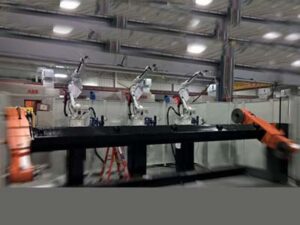
- Fixtures are devices used to securely hold and support workpieces during manufacturing processes. They are designed to provide a stable and repeatable platform for various operations, such as machining, welding, or assembly. Fixtures are customized to accommodate specific workpiece geometries and ensure that each part is positioned consistently for accurate processing.
- Positioners are equipment used to position and orient workpieces with high precision. They can rotate, tilt, or move workpieces along multiple axes, enabling optimal access and alignment for various operations. Positioners are commonly used in conjunction with fixtures to enhance the flexibility and efficiency of production processes.
Turn Tables
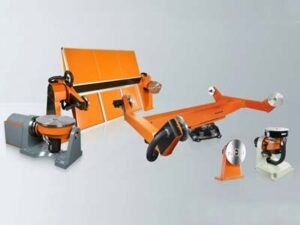
Turn tables are mechanical devices designed to rotate workpieces around a central axis. They are used to orient and position workpieces for various operations, such as machining, assembly, inspection, and packaging. Turn tables can be configured to handle a variety of workpiece sizes and weights, and they are often integrated with other automation equipment to create seamless production workflows.